

Stravinsky: Babel, Cantata for Narrator, Male Chorus and Orchestra
$19.95 - $499.95


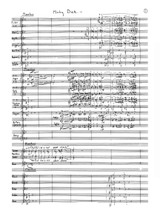
Bernard Herrmann composed Moby Dick, a dramatic cantata for two tenors, two basses, male chorus, and orchestra, between 1936 and 1938, with a libretto by William Clark Harrington drawn from Herman Melville's novel. Herrmann had originally considered setting the story as an opera, but chose the cantata form instead, believing it best suited to capturing both the drama of the narrative and the flavor of Melville's prose. The work is dedicated to Charles Ives, and it received its premiere on 11 April 1940 at Carnegie Hall, performed by the New York Philharmonic and the male chorus of the Westminster Choir under John Barbirolli, who called it the most important work he had heard from a young American composer.
The cantata unfolds in a continuous sequence of scenes drawn directly from the novel, moving from the famous opening line "Call me Ishmael" through the ship's departure, Ahab's obsessive monologues, the sighting of the whale, and the climactic pursuit, closing with Ishmael's lone survival. Herrmann's writing is vivid and immediate, pairing dramatic, sharply etched choral writing with two extended solo monologues for tenor, Ahab's "Yonder, by the ever-brimming goblet's rim" and Ishmael's "It was a clear steel-blue day," both known for their atmospheric orchestral color and sensitivity to text. The orchestral writing already shows the same instinct for narrative pacing and vivid color that would define Herrmann's later work as one of the most celebrated film composers of the twentieth century.
Though it has remained less familiar than Herrmann's film scores, Moby Dick has been praised for its immediate impact and its skill in setting the English language dramatically, qualities that make it especially rewarding for choral societies and orchestras approaching it for the first time. Its combination of a compelling narrative arc, strong solo writing, and richly atmospheric orchestration makes this a striking and accessible large-scale choral work, offering an ensemble the chance to bring a genuinely dramatic and unjustly overlooked American cantata to the concert stage.


