Shostakovich: Symphony No.10 Op.93
$249.50 - $1,395.00

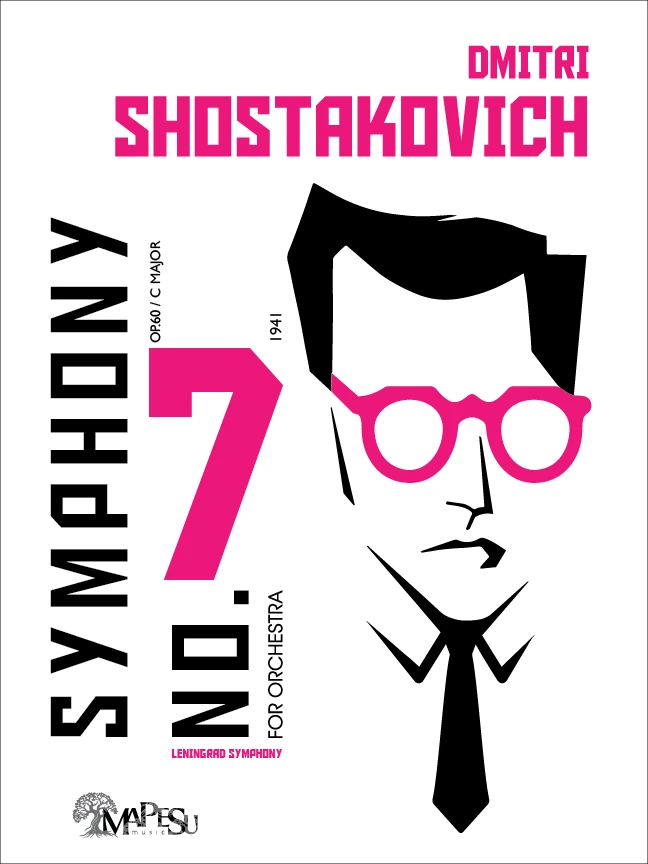
Dmitri Shostakovich’s Symphony No. 7 in C major, Op. 60, known as the Leningrad Symphony, was begun in Leningrad in July 1941 and dedicated to the city. The first three movements were completed there by the end of September, during the early weeks of the siege. After he was evacuated, Shostakovich finished the finale in Kuibyshev on 27 December 1941. The symphony was first performed there on 5 March 1942 by the Bolshoi Theatre Orchestra under Samuil Samosud, and it received its celebrated Leningrad performance on 9 August 1942 under Karl Eliasberg.
The symphony is in four movements: Allegretto, Moderato (poco allegretto), Adagio, and Allegro non troppo. Its first movement is famous for a march that begins almost inaudibly and builds, by repetition and added instrumentation, into an overwhelming climax. The central movements offer lyrical and more intimate contrast, and the finale drives toward a triumphant close in C major. At roughly 75 to 80 minutes it is Shostakovich’s longest symphony, and it makes a full evening’s program on its own.
This complete score and set of parts gives orchestras with the resources to meet its demands the chance to perform one of the most powerful and widely recognized symphonies of the twentieth century.